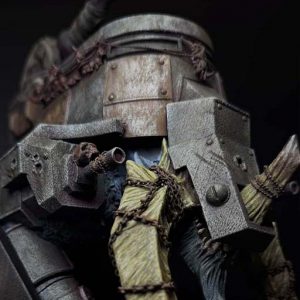
Once, Avallon was a quiet rural canton—stone villages clustered around ancient chapels, fields worked by families whose prayers were older than memory. Pilgrims passed through on worn roads, bells rang at dawn and dusk, and the land endured.
Then the war came.
Not all at once—but like a sickness.
The front lines crept closer each season. Trenches were cut into fields that had never known iron. Shelling unearthed things that should have remained buried: ossuaries beneath churches, sealed reliquaries, stones etched with pre-Crusade scripture scratched out by trembling hands. The bells stopped ringing soon after.
Smoke never truly leaves Avallon now. Even on clear days, ash drifts across the hedgerows like grey snow. Crops fail unless watered with blood. Livestock are born wrong. The villagers whisper prayers that do not appear in any catechism, learned from voices that murmur beneath the soil and within ruined sanctuaries.
Some say Avallon was chosen.
Others say it was remembered.
A heretical presence has taken root in the countryside—entrenched cults, broken clergy, wandering warbands preaching revelation through annihilation. The faithful march in, sent to cleanse the land. Few return unchanged. Fewer return at all.
At the heart of Avallon stands a blackened abbey, its towers cracked, its altar buried under rubble and bodies. Beneath it, something stirs—ancient, patient, and pleased by the war above.
This is not a battle for territory.
This is a war over what the land is allowed to remember.
And Avallon remembers everything.